Artemis II Carries Four Astronauts Around the Moon for the First Time in Over 50 Years

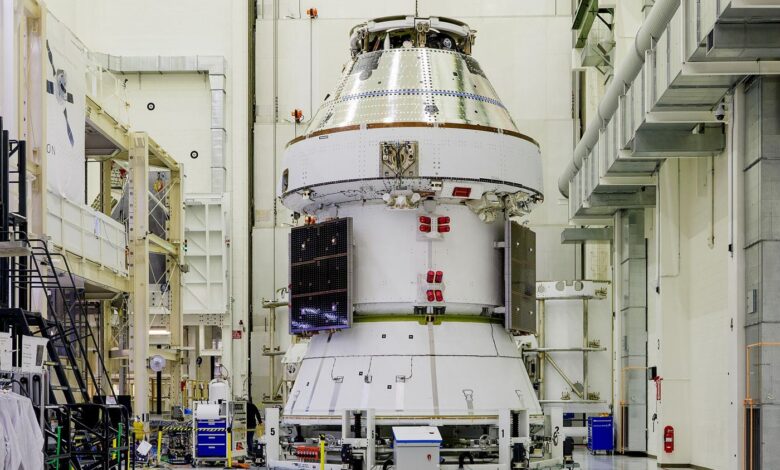
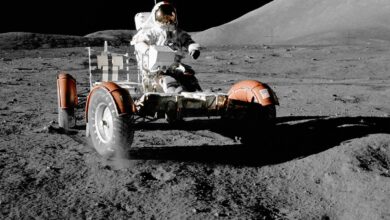
On 1 April 2026, four astronauts left Earth on the first crewed voyage to the Moon in more than half a century. NASA’s Artemis II mission launched from Kennedy Space Center in Florida aboard the Space Launch System rocket, carrying commander Reid Wiseman, pilot Victor Glover, mission specialist Christina Koch and Canadian astronaut Jeremy Hansen in the Orion spacecraft, named Integrity. No human had travelled beyond low Earth orbit since Apollo 17 in December 1972. The roughly ten-day mission follows a free-return trajectory: Orion loops around the far side of the Moon and the Moon’s gravity slingshots it back toward Earth for a splashdown in the Pacific Ocean off San Diego. During the flyby on 6 April, the crew passed behind the Moon, losing radio contact for about 40 minutes, and broke the record set by Apollo 13 in 1970 for the farthest humans have travelled from Earth.
What the Evidence Shows
The mission is a test flight, not a landing, and its real purpose is to prove that Orion’s life support, navigation and heat shield work with people aboard before NASA attempts a landing. Orion’s heat shield, the largest of its kind ever built, must survive temperatures of about 2,760 degrees Celsius as the capsule plunges back through Earth’s atmosphere, roughly half the temperature of the Sun’s surface. The crew spent the first day in Earth orbit checking the spacecraft before committing to the Moon, and from their unique position they even watched a solar eclipse as Orion emerged from behind the lunar far side. Koch is the first woman assigned to a lunar mission, Glover the first person of colour, and Hansen the first non-American to travel to the Moon. If the flight succeeds, it clears the way for Artemis III, planned for 2028, which aims to put astronauts back on the lunar surface, including the first woman to walk on the Moon. Reporting and analysis from sources such as National Science Foundation track the same developments, and specialists following Artemis II crewed Moon flyby say the direction is now consistent across independent lines of evidence.
The Wider Context
The wider context is a research landscape in which replication and open data now decide reputations. Findings connected to Artemis II crewed Moon flyby are being checked by independent groups with shared datasets, and the teams involved publish their methods in full so rivals can test every step. That discipline is slower than a headline cycle, but it is why results in this area increasingly survive first contact with scrutiny.
What Happens Next
What happens next in the story of Artemis II crewed Moon flyby will be decided by follow-up work already under way: larger samples, longer observation and instruments that have not yet come online. The researchers involved are unusually united on one point, that the current results justify the next investment of time and money. Readers will not have to wait long for the first tests of that claim. You can follow related developments in our coverage of science.
There is a practical lesson in all of this for readers deciding what to do today. Start with the verified facts, be wary of anyone promising certainty, and prefer reversible steps while the evidence is still developing. Circumstances differ by country, income and personal situation, so general guidance should always be weighed against your own context before you act on it in any significant or lasting way.