

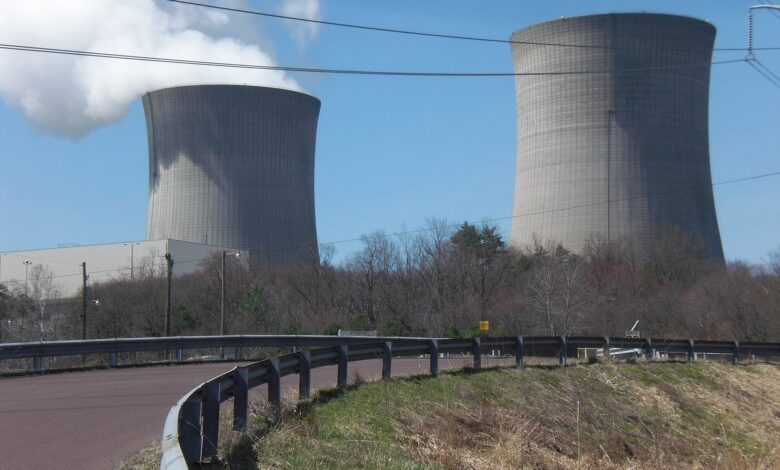
Advanced Nuclear’s Quiet Race: A Field Guide to the Contenders
Nuclear power’s next generation is not one technology but a field of rivals: small modular light-water reactors, molten salt designs, high-temperature gas reactors and fast reactors that burn waste as fuel. All promise improvements in safety, cost or flexibility over the giant plants of the past; they differ sharply in how they propose to deliver them. Oversight frameworks at the IAEA are adapting to assess them.
The main families, in brief
Small modular reactors shrink the proven water-cooled design and move construction into factories. Molten salt reactors dissolve fuel in liquid salt for low-pressure operation and potential waste benefits. Gas-cooled designs run hotter, suiting industrial heat as well as electricity. Fast reactors close the fuel cycle, extracting far more energy from uranium and shrinking waste lifetimes.
Each trades maturity against ambition: the closer a design sits to proven technology, the sooner it can be licensed, and the less revolutionary its advantages.
What actually decides the winner
History suggests the victor is chosen less by elegance than by supply chains, licensing stamina and the cost of the tenth unit rather than the first. Our analysis across theuploadarticle.com keeps returning to that tenth-unit test: technologies that learn by building win; those that remain bespoke demonstrations do not, whatever their physics.
An idea older than its moment
Molten salt reactors were demonstrated at Oak Ridge in the 1960s, then shelved as the industry standardised on water-cooled designs for reasons as much institutional as technical. Their revival rides on new tools: modern alloys, computational fluid dynamics that can model circulating fuel, and manufacturing methods the original pioneers lacked. Whether the revival succeeds depends less on proving the physics, which is comparatively well understood, than on proving the engineering and the business case in that order.
Money is a design constraint too
Advanced nuclear start-ups collectively raised billions on the promise of factory-built, repeatable plants. The sector’s recent history includes painful corrections where costs and schedules met reality. The survivors share traits: conservative first products, supply chains designed alongside the reactor, and regulators engaged early rather than presented with finished designs. Investors now diligence those traits as hard as the neutronics, which may be the surest sign the field is maturing.
The regulatory frontier
Licensing a reactor whose fuel moves is a genuinely new problem for regulators accustomed to solid cores in fixed geometries. Agencies are developing performance-based frameworks that judge designs on demonstrated safety functions rather than resemblance to old plants. The quality of the materials data now being generated will show up, years from now, as licensing speed, which is why programmes like this one matter far beyond the laboratory bench where the salt is quietly corroding its test coupons.
How to read a study like a scientist
Single studies rarely settle questions; they adjust probabilities. The habits that help: check the sample size and who was studied, ask whether the effect is large enough to matter outside the laboratory, look for whether the result has been replicated or pre-registered, and notice what the researchers themselves list as limitations. Science coverage earns trust not by amplifying the loudest claim but by placing each result on the scale of existing evidence. That is the standard this page tries to keep, and the reason follow-ups and corrections are part of the process rather than embarrassments to it.
Why this field is moving now
Progress in the sciences is lumpy because it waits on tools. A cheaper sensor, a faster sequencer, a better telescope or a new statistical method can unlock a decade of queued questions at once, which is why several apparently unrelated breakthroughs often arrive together: they were all waiting on the same instrument. Funding follows the tools, talent clusters around them, and the literature swells. Readers trying to judge whether a field is genuinely accelerating should look less at individual papers and more at whether the underlying instruments are getting cheaper, faster or more widely shared.
Related reading: How Ecosystems Actually Recover From Oil Spills




One Comment