Fusion power has been thirty years away for about fifty years, which is why engineers in the field have learned to distrust announcements and trust milestones instead. Judged by that stricter standard, the past few years have been genuinely significant: reactions that return more energy than they consume, plasmas held steady for record durations, and magnets and materials that survive conditions once thought impractical. The grind is slow, but it is producing results that can be measured.
The physics goal is simple to state and brutal to achieve. Fuse light atomic nuclei, as the Sun does, and the mass lost becomes energy. On Earth that means heating fuel to well over one hundred million degrees, confining it long enough, and extracting more power than the heating and confinement consumed. Every serious programme is an attempt to satisfy those three demands at once, inside a machine that must not melt while doing so.
Milestones That Actually Matter
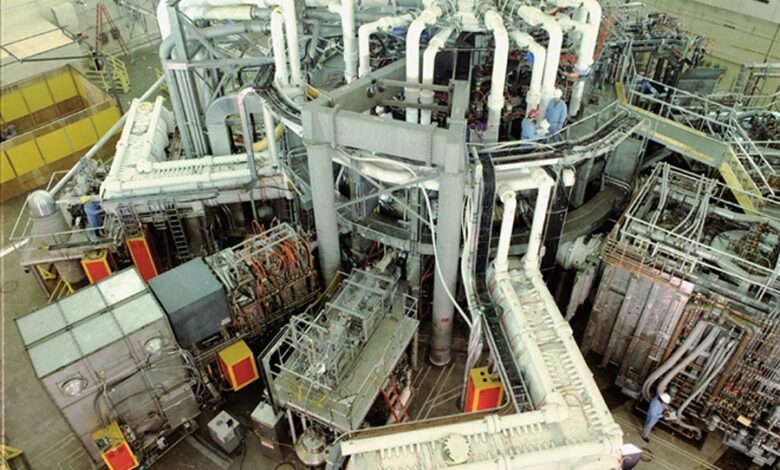
The headline breakthrough came when a laser-driven experiment produced a fusion reaction yielding more energy than the laser delivered to the fuel — a threshold called ignition, crossed once and then repeated. Magnetic confinement has its own ledger of progress: longer pulses, hotter plasmas and steadier control, the unglamorous metrics that decide whether a reactor can run as a power station rather than perform as an experiment. The international effort coordinated through ITER in southern France remains the largest of these machines, designed to produce ten times more fusion power than it consumes in heating.
Private investment has changed the tempo. Dozens of start-ups now pursue compact designs using high-temperature superconducting magnets, which generate stronger fields in smaller machines and have moved from laboratory curiosity to manufactured component. Readers following our technology coverage will recognise the pattern from other industries: once a key component becomes manufacturable, timelines compress and costs start their long fall.
The Hard Problems Left
Honest assessments, including those published by the International Atomic Energy Agency, list the obstacles plainly. Reactor walls must endure years of neutron bombardment without becoming brittle or dangerously radioactive. Tritium, one of the two fuels, is scarce and must eventually be bred inside the reactor itself. And the whole system must do all of this cheaply enough to compete with fission, renewables and storage, which keep getting cheaper while fusion matures.
Materials science is where much of the real race now happens. Tungsten components that face the plasma, remote-handling robots that maintain a radioactive vessel, and control systems that adjust magnetic fields in milliseconds are as decisive as the plasma physics itself. Each solved problem removes a reason fusion could not work commercially, which is a different and more useful claim than a promised switch-on date.
Why Governments Keep Paying
Energy security explains the patience. A working fusion sector would offer fuel from seawater and lithium, no carbon emissions, no long-lived high-level waste of the fission kind, and no dependence on weather. For countries importing most of their energy, that combination justifies decades of research spending even on sober timelines. The Upload Article has tracked how energy policy increasingly treats fusion as infrastructure to be ready for, rather than a curiosity to be watched.
What Happens Next
The next milestones to watch are operational, not theatrical: a magnetic machine sustaining high gain for minutes rather than seconds, a private reactor reaching net energy in a repeatable run, and supply chains forming around magnets, cryogenics and tritium handling. None will be the day fusion powers a city. Together, though, they would mark the point where the question changes from whether fusion works to who builds it first — and that change, after fifty years, would be the real milestone.