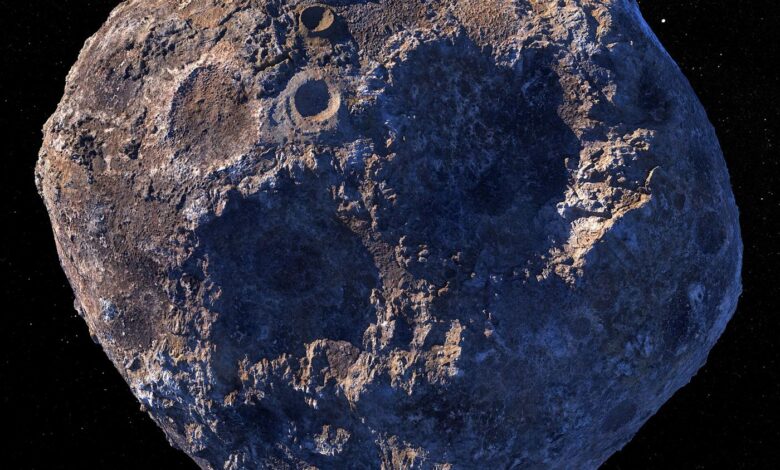
Protecting Earth from a hazardous asteroid sounds like fiction, yet space agencies now treat it as a practical engineering problem that can be tested in advance. The principle has already been demonstrated: a spacecraft striking a small asteroid can change its orbit by a measurable amount. The work since then has focused on precision. Scientists want to know how much of the impact energy goes into moving the target, how much is lost to ejected debris, and how the result changes with the asteroid’s internal structure. A loosely packed rubble pile may react very differently from a solid rock. Telescopic follow-up measurements, combined with close observations from companion spacecraft, help researchers separate those effects. That detail matters because a real deflection mission would need to act years before a predicted impact, when even a tiny change in speed grows into a safe distance by the time the object reaches Earth. Agencies also rehearse the decision chain, from discovery and orbit calculation through international consultation to launch. Planetary defence therefore joins astronomy, engineering and public policy in a single programme, turning a rare but serious natural hazard into one that humanity can plausibly prepare for with evidence rather than improvisation.
What the Evidence Shows
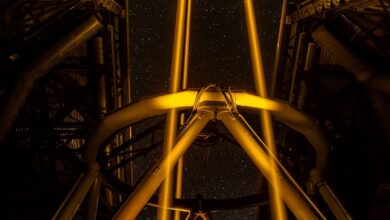
The harder challenge may be finding dangerous objects early enough for any of this to matter. Surveys continue to catalogue near-Earth asteroids, with new telescopes designed to spot smaller, darker bodies that earlier searches missed. Most objects pose no threat, and careful tracking usually rules out collisions decades ahead, which is precisely why monitoring works. When a new discovery carries a small impact probability, follow-up observations typically shrink the uncertainty until the risk disappears. Deflection research also produces side benefits for basic science, because visiting an asteroid reveals how these primitive bodies are assembled and how they respond to forces. Mission planners compare several response options, including a kinetic impactor, a slow gravitational tug from a nearby spacecraft, and, only in extreme scenarios, more energetic methods. By testing the most straightforward option first and measuring its results honestly, researchers are building a toolkit grounded in data. The goal is reassurance backed by capability: a monitored sky, a rehearsed response, and enough lead time to act calmly should a genuine threat ever be confirmed. Reporting and analysis from sources such as National Science Foundation track the same developments, and specialists following asteroid deflection planetary defence say the direction is now consistent across independent lines of evidence.
The Wider Context
The wider context is a research landscape in which replication and open data now decide reputations. Findings connected to asteroid deflection planetary defence are being checked by independent groups with shared datasets, and the teams involved publish their methods in full so rivals can test every step. That discipline is slower than a headline cycle, but it is why results in this area increasingly survive first contact with scrutiny.
What Happens Next
What happens next in the story of asteroid deflection planetary defence will be decided by follow-up work already under way: larger samples, longer observation and instruments that have not yet come online. The researchers involved are unusually united on one point, that the current results justify the next investment of time and money. Readers will not have to wait long for the first tests of that claim. You can follow related developments in our coverage of science.
There is a practical lesson in all of this for readers deciding what to do today. Start with the verified facts, be wary of anyone promising certainty, and prefer reversible steps while the evidence is still developing. Circumstances differ by country, income and personal situation, so general guidance should always be weighed against your own context before you act on it in any significant or lasting way.