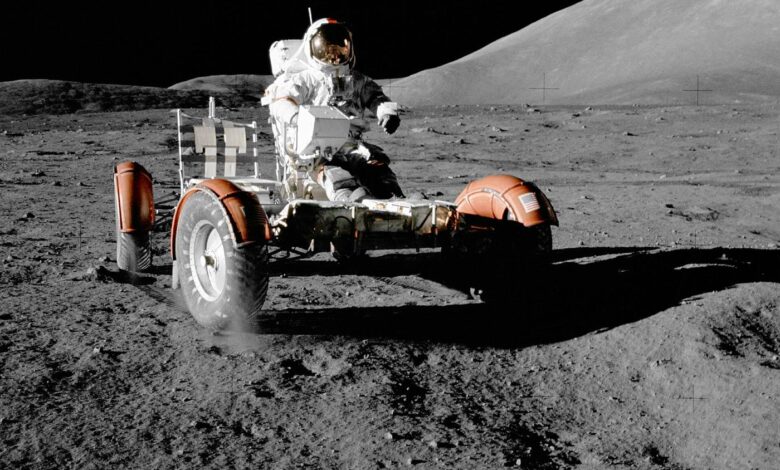
NASA is preparing to send a nuclear-powered rover to the Moon’s south pole, one of the most challenging and scientifically prized destinations in the solar system. The six-wheeled PROMISE rover, announced at the MAX POWER exposition at Kennedy Space Center on 7 November, will be delivered by Blue Origin under a 94 million dollar base award, with a 140 million dollar performance option. Unlike solar-powered rovers, which shut down during the two-week lunar night, a nuclear power source lets PROMISE keep working through darkness and inside permanently shadowed craters. Its mission is to explore terrain where water ice is believed to lie frozen in the soil, and to test the technologies a future Moon base will depend on. The award is part of a much larger lunar infrastructure programme, with NASA selecting eight companies for a Commercial Lunar Payload Services follow-on worth up to 10 billion dollars over ten years.
What the Evidence Shows
The south pole matters because its water ice could become drinking water, breathable oxygen and even rocket propellant for crews working on the Moon. Extracting it would cut the cost of lunar operations enormously, since every kilogram lifted from Earth is expensive. PROMISE will map ice deposits, test drilling and sampling tools, and measure radiation and temperature extremes that future habitats must withstand. The mission also fits into NASA’s wider Moon Base contracting effort, which includes six task orders worth about 1.3 billion dollars for moving cargo to the surface. If the rover succeeds, it will show that nuclear power can keep machines alive in the coldest, darkest corners of the Moon, clearing the way for a sustained human presence there. Reporting and analysis from sources such as National Science Foundation track the same developments, and specialists following the nuclear-powered rover heading for the Moon say the direction is now consistent across independent lines of evidence.
The Wider Context
The wider context is a research landscape in which replication and open data now decide reputations. Findings connected to the nuclear-powered rover heading for the Moon are being checked by independent groups with shared datasets, and the teams involved publish their methods in full so rivals can test every step. That discipline is slower than a headline cycle, but it is why results in this area increasingly survive first contact with scrutiny.
What Happens Next
What happens next in the story of the nuclear-powered rover heading for the Moon will be decided by follow-up work already under way: larger samples, longer observation and instruments that have not yet come online. The researchers involved are unusually united on one point, that the current results justify the next investment of time and money. Readers will not have to wait long for the first tests of that claim. You can follow related developments in our coverage of science.
There is a practical lesson in all of this for readers deciding what to do today. Start with the verified facts, be wary of anyone promising certainty, and prefer reversible steps while the evidence is still developing. Circumstances differ by country, income and personal situation, so general guidance should always be weighed against your own context before you act on it in any significant or lasting way.