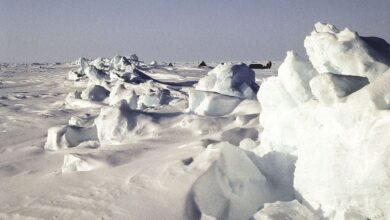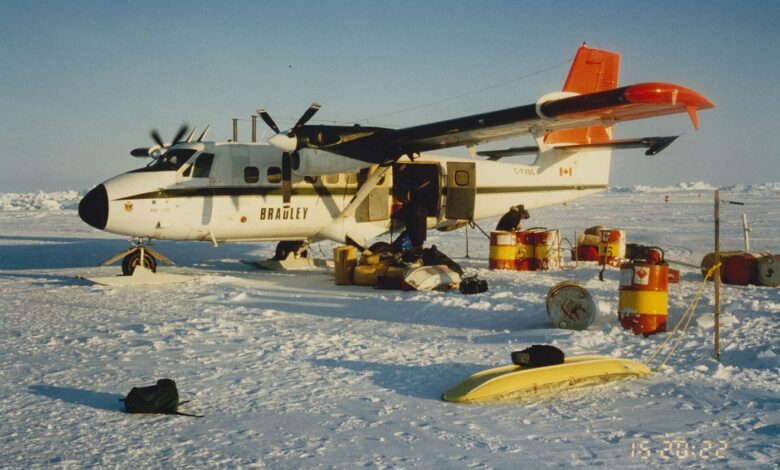
Arctic sea ice is forming later each autumn because the upper ocean now holds summer heat for longer before releasing it to the cold polar air. Researchers tracking freeze-up dates across the Beaufort, Chukchi and Laptev seas say the delay has grown steadily over recent decades, in some areas by more than a week. Open water absorbs far more sunlight than reflective ice, so every extra ice-free day warms the surface further and pushes freezing back again. Satellites measuring ice thickness also show that the ice which eventually forms is often thinner than the multi-year floes it replaces. Thinner ice melts faster the following spring, reinforcing the same cycle. For coastal communities, later freeze-up means a longer season of powerful waves eroding shorelines that frozen seas once protected. Hunters and transport operators who rely on stable land-fast ice face a shorter, less predictable working window. Scientists stress that the pattern is not a single unusual year but a consistent shift recorded by independent instruments. Understanding exactly how ocean heat, wind and snowfall interact during freeze-up has become a priority for improving seasonal forecasts across the far north.
What the Evidence Shows
The consequences of the delayed Arctic freeze extend well beyond the polar region itself. Wildlife that depends on early ice, including seals that pup on stable floes and the polar bears that hunt them, must adjust feeding and breeding routines to a compressed season. Shipping planners, meanwhile, see a longer navigable window, but one complicated by mobile young ice, fog and rapidly changing weather. Climate modellers say autumn heat release from open water can also influence storm tracks at lower latitudes, although the strength of that link remains debated. Field teams are now deploying autonomous buoys that measure temperature through the water column and report how quickly stored heat escapes once air temperatures plunge. Those profiles help explain why neighbouring bays can freeze weeks apart despite similar weather. Researchers caution that thicker snow on thin ice can insulate it from the cold, slowing growth further in some places while protecting it in others. Long-term monitoring, they argue, matters more than any single season, because the trend shapes ecosystems, coastlines and livelihoods for decades ahead. Reporting and analysis from sources such as National Science Foundation track the same developments, and specialists following the delayed Arctic freeze say the direction is now consistent across independent lines of evidence.
The Wider Context
The wider context is a research landscape in which replication and open data now decide reputations. Findings connected to the delayed Arctic freeze are being checked by independent groups with shared datasets, and the teams involved publish their methods in full so rivals can test every step. That discipline is slower than a headline cycle, but it is why results in this area increasingly survive first contact with scrutiny.
What Happens Next
What happens next in the story of the delayed Arctic freeze will be decided by follow-up work already under way: larger samples, longer observation and instruments that have not yet come online. The researchers involved are unusually united on one point, that the current results justify the next investment of time and money. Readers will not have to wait long for the first tests of that claim. You can follow related developments in our coverage of science.
There is a practical lesson in all of this for readers deciding what to do today. Start with the verified facts, be wary of anyone promising certainty, and prefer reversible steps while the evidence is still developing. Circumstances differ by country, income and personal situation, so general guidance should always be weighed against your own context before you act on it in any significant or lasting way.