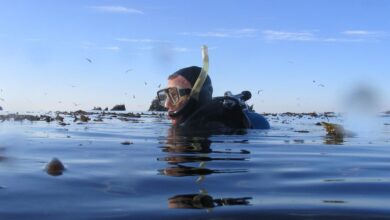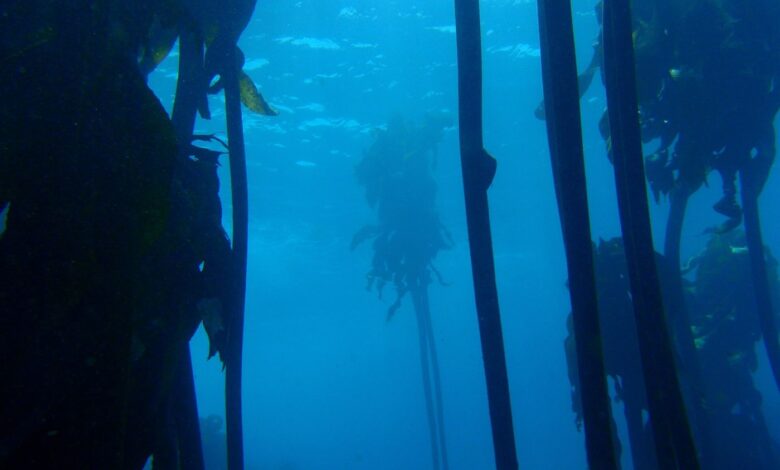
Restoration divers working in sheltered bays are taking a hands-on approach to rebuilding kelp forests, planting young kelp grown in nurseries onto seeded lines stretched across the seabed. The method starts on land, where kelp spores are settled onto twine in tanks and raised until tiny blades appear. Divers then unroll the lines underwater and fix them to the rocky bottom, giving the young plants light, space and a firm anchor. Supporters say planting can jump-start forests in places where natural spores are now scarce, rather than waiting for drifting fragments to arrive by chance. Early planted sites are being watched closely through the growing season. Organisers say community volunteers increasingly help in the nurseries, learning the whole process from spore to seabed before joining supervised planting days.
What the Evidence Shows
The planting work is deliberately small and careful, because survival depends on local conditions more than on the number of lines installed. Teams choose sites with clean water, stable rock and limited grazing, and they return regularly to clear competing algae and check that lines have not tangled or torn in storms. Where young kelp takes hold, the blades lengthen quickly and begin to shelter crabs, snails and juvenile fish. Researchers involved stress that planting is not a substitute for tackling warming water and pollution, the pressures that thinned the forests in the first place. Used alongside those wider efforts, however, seeded lines offer a practical way to help forests re-establish. Divers expect the first planted sites to teach the hardest lessons, refining depth, spacing and season so later, larger plantings waste less effort and material. Reporting and analysis from sources such as National Science Foundation track the same developments, and specialists following kelp planting on seeded lines say the direction is now consistent across independent lines of evidence.
The Wider Context
The wider context is a research landscape in which replication and open data now decide reputations. Findings connected to kelp planting on seeded lines are being checked by independent groups with shared datasets, and the teams involved publish their methods in full so rivals can test every step. That discipline is slower than a headline cycle, but it is why results in this area increasingly survive first contact with scrutiny.
What Happens Next
What happens next in the story of kelp planting on seeded lines will be decided by follow-up work already under way: larger samples, longer observation and instruments that have not yet come online. The researchers involved are unusually united on one point, that the current results justify the next investment of time and money. Readers will not have to wait long for the first tests of that claim. You can follow related developments in our coverage of science.
There is a practical lesson in all of this for readers deciding what to do today. Start with the verified facts, be wary of anyone promising certainty, and prefer reversible steps while the evidence is still developing. Circumstances differ by country, income and personal situation, so general guidance should always be weighed against your own context before you act on it in any significant or lasting way.