How Ecosystems Actually Recover From Oil Spills
When the cameras leave an oil spill, the ecosystem’s real timeline is just beginning. Decades of monitoring after major spills, synthesised in research programmes associated with NOAA and Gulf research initiatives, reveal recovery not as a single curve but as many: microbes and grasses in years, fish in a decade or more, deep-sea corals and marine mammals across generations.
What speeds recovery, and what slows it
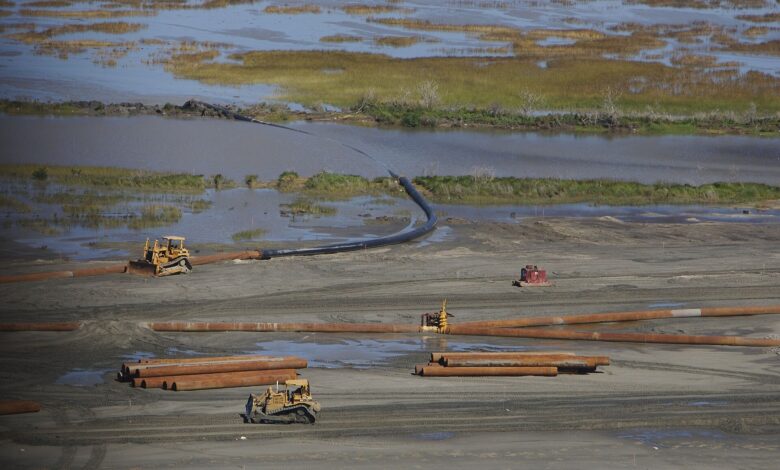
Intact habitat nearby is the great accelerant: recolonisation needs a source. Chronic low-level contamination is the great brake, particularly where oil persists in sediments and re-exposes each new generation. Shoreline type matters enormously; marshes and mangroves, the nurseries of the system, are both the most valuable and the slowest to forgive.
Human intervention helps at the margins. Planting marsh grass and rebuilding oyster reefs demonstrably work; aggressive shoreline cleaning sometimes does more harm than the oil.
The baseline problem
The hardest scientific question is what “recovered” means when the pre-spill baseline was itself a stressed ecosystem. Modern monitoring therefore aims higher than restoration to a photograph: it aims for functioning food webs in the ocean that now exists. Our science coverage on theuploadarticle.com treats that shift, from nostalgia to function, as one of the most important in environmental policy.
The money and the marshes
The settlement that followed the spill directed billions into Gulf restoration, one of the largest environmental funding programmes in history. Marsh creation, barrier island rebuilding and oyster reef restoration are under way at scales that would have been unthinkable without it. Scientists reviewing the portfolio stress that restoration works best as triage guided by monitoring: the new decline data are already being used to argue for redirecting effort toward the habitats whose loss drives the wider food-web trends.
The deep sea keeps the longest ledger
Nowhere is recovery slower than the deep Gulf, where cold, dark conditions stretch biological timescales and where a significant fraction of the oil ultimately settled. Deep corals damaged in 2010 show growth measured in millimetres per year; their recovery, if it completes, is a project for the twenty-second century. Scientists argue this is the strongest case for the precautionary funding of baseline surveys before disasters: you cannot measure a wound in a place you never examined healthy.
What recovery would even look like
Ecologists increasingly define recovery functionally: marshes that trap sediment and shelter juveniles, food webs that support fisheries through bad years, populations that reproduce at replacement across the range of conditions the modern Gulf actually presents, including its warming water and recurring dead zones. By that measure the work is generational and the funding horizon should match. The study’s deepest contribution may be forcing that honesty into programmes designed around shorter political clocks.
How to read a study like a scientist
Single studies rarely settle questions; they adjust probabilities. The habits that help: check the sample size and who was studied, ask whether the effect is large enough to matter outside the laboratory, look for whether the result has been replicated or pre-registered, and notice what the researchers themselves list as limitations. Science coverage earns trust not by amplifying the loudest claim but by placing each result on the scale of existing evidence. That is the standard this page tries to keep, and the reason follow-ups and corrections are part of the process rather than embarrassments to it.
Why this field is moving now
Progress in the sciences is lumpy because it waits on tools. A cheaper sensor, a faster sequencer, a better telescope or a new statistical method can unlock a decade of queued questions at once, which is why several apparently unrelated breakthroughs often arrive together: they were all waiting on the same instrument. Funding follows the tools, talent clusters around them, and the literature swells. Readers trying to judge whether a field is genuinely accelerating should look less at individual papers and more at whether the underlying instruments are getting cheaper, faster or more widely shared.
Related reading: Advanced Nuclear’s Quiet Race: A Field Guide to the Contenders