For millions of adults living with type 2 diabetes who do not use insulin, checking blood sugar has long meant finger-prick tests — a few snapshots a day, with long blind stretches in between. A major clinical trial published in the New England Journal of Medicine now suggests a better option: continuous glucose monitors (CGMs) helped patients spend approximately five more hours a day in their target blood sugar range, a difference researchers describe as clinically meaningful.
What the Trial Found
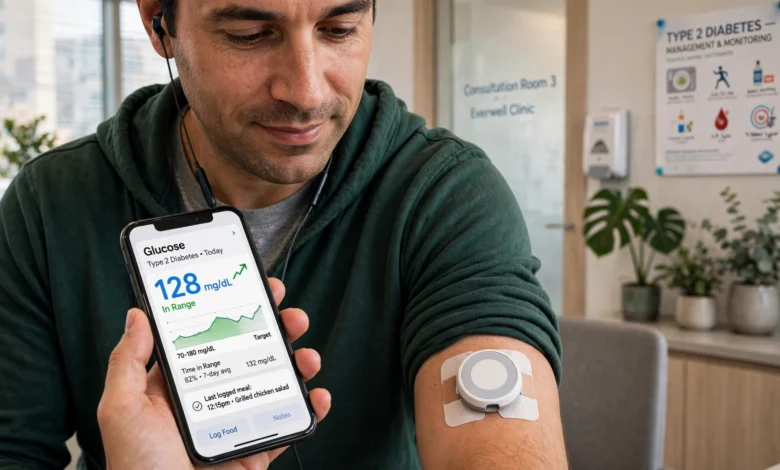
Described as the largest clinical trial of its kind, the study focused on a group often overlooked in diabetes technology research: people with type 2 diabetes who are not on insulin. CGMs — small wearable sensors that read glucose just under the skin and send readings to a phone or receiver every few minutes — have traditionally been prescribed mainly for people using insulin. This trial asked whether the same real-time feedback could help a much larger population.
According to reporting from the University of Colorado Anschutz Medical Campus, participants using the monitors spent roughly five additional hours a day within their healthy target range compared with usual care. Time in range matters because it captures the whole day’s pattern — the spikes after meals and the dips overnight — rather than a single average.
Why Five Hours Matters
Blood sugar control is ultimately about reducing complications: damage to eyes, kidneys, nerves and the cardiovascular system builds up over years of exposure to high glucose. More time in range means less of that exposure. Just as importantly, the feedback loop itself changes behaviour. When people can see, within minutes, how a meal, a walk or a stressful morning moves their reading, they learn their own patterns in a way no quarterly lab result can teach.
That kind of personalised, data-driven care is arriving across medicine. We saw a related shift in our coverage of the added advantages of doctor AI chatbots for patients, where timely, tailored information helps people act earlier rather than later.
There is also a psychological dividend that numbers alone do not capture. Diabetes management can feel thankless: effort today prevents harm years from now, with little visible reward in between. A monitor changes that equation by giving immediate credit for good decisions. A short walk after dinner visibly flattens a spike. A smaller portion visibly softens one. Researchers say that sense of agency is a powerful reason participants stayed engaged throughout the trial, rather than abandoning the device after the novelty wore off — a common fate for health gadgets. Sustained engagement, in turn, is what turns a promising trial result into lasting benefit in everyday life.
Who Could Benefit — and What Are the Barriers?
The potential reach is large. Type 2 diabetes affects hundreds of millions of people worldwide, and only a minority use insulin. If CGMs help this broader group, guidelines and insurance coverage may need to catch up with the evidence. Cost remains the main barrier: sensors are replaced every 10 to 14 days, and out-of-pocket prices put them out of reach for many patients without coverage.
There are practical questions too. Some people find wearing a sensor uncomfortable or feel overwhelmed by constant data. Clinicians stress that the technology works best alongside education and follow-up, not as a gadget handed over without support. Long-term care decisions — like those we discussed in what five-year outcomes reveal about treatment choices — reward approaches patients can actually sustain.
What Patients Should Do Next
If you have type 2 diabetes and do not use insulin, this research is a good reason to start a conversation, not to self-prescribe. Ask your clinician whether a trial period with a CGM makes sense for you, what target range you should aim for, and how you will review the data together. Bring questions about coverage, and ask what changes — medication, meals, activity — the readings are meant to guide.
The Bottom Line
Five more hours a day in a healthy range is not a minor improvement; compounded over months and years, it could mean fewer complications and better quality of life for a very large group of patients. The largest trial of its kind has made the case clearly. The challenge now is access — making sure a proven tool reaches the people the evidence says it can help.